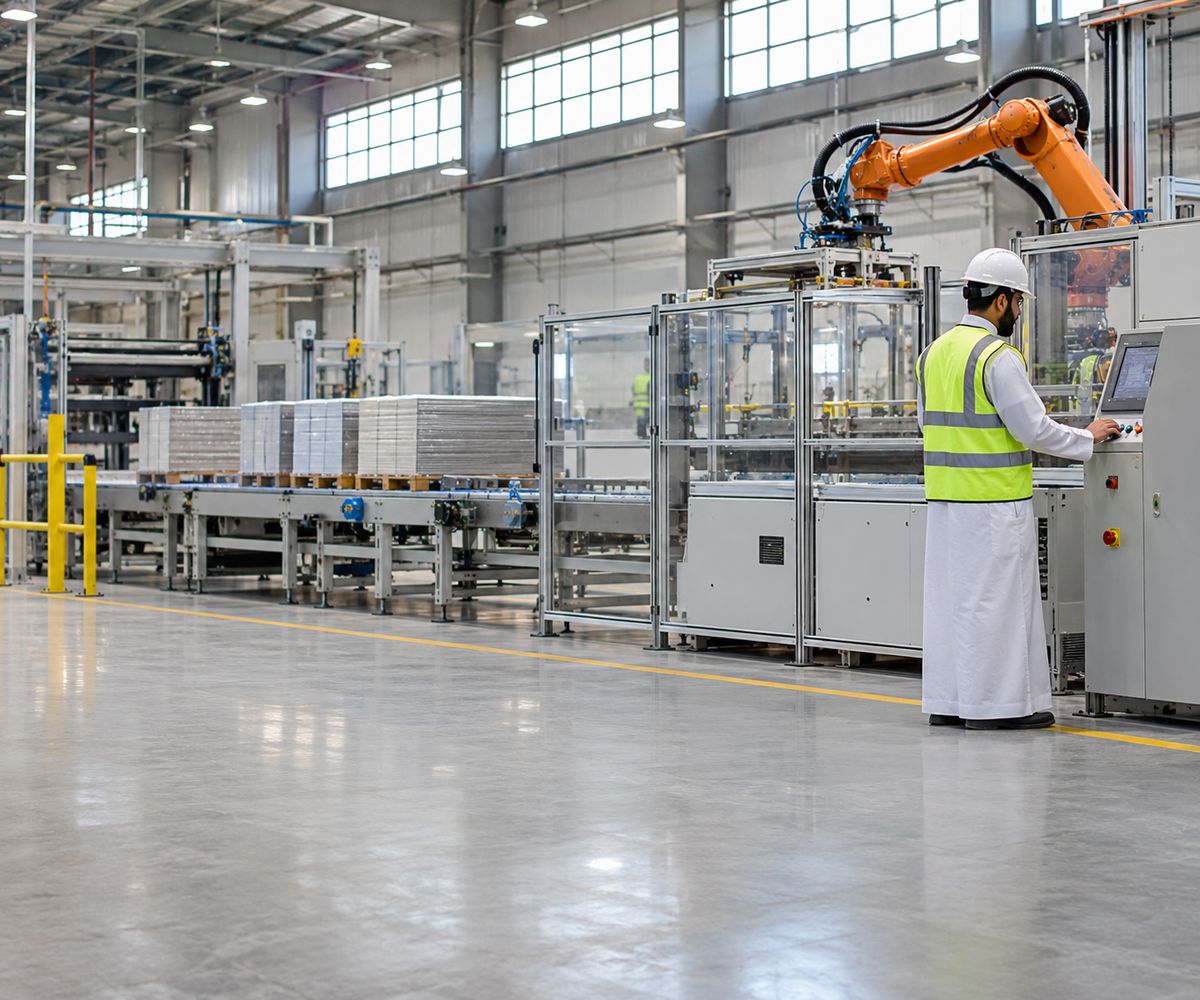
Typical projects
Glass and bottle plants, PET preforms and closures, corrugated packaging, precast concrete and blocks, steel fabrication, cables, paints and coatings, plastics compounding, filters and auto components. Some are greenfield plants in an industrial city. Others add a line to an existing site or bring production home from a supplier abroad.
The numbers that decide a factory
Factory economics hinge on a handful of variables, and a lender will go straight to them:
- Landed import price. Your selling price is capped by what an importer can land the product for, including freight and duty. We build the price from that ceiling down, not from cost up.
- Utilisation. Nameplate capacity is rarely reached in year one. The ramp-up curve, shift pattern and changeover time matter more than the headline tonnage.
- Raw material and energy. Resin, cullet, steel coil or cement prices, and the gas or power tariff, set most of the operating cost. We show where each one comes from and how sensitive the margin is to it.
- Working capital. Imported inputs, credit terms with distributors and finished-goods stock tie up cash that first-time manufacturers underestimate.
- Capital cost. Machinery quotations, civil works, installation and commissioning, with a contingency that a technical reviewer will accept.
Location changes the financing
Where the plant sits affects how much SIDF will lend and for how long. Its published incentives allow up to 50 per cent of project cost with a 15-year tenor in first-class cities such as Riyadh, Jeddah and Dammam, rising to 60 per cent in locations such as Al-Qassim, Sudair and Al-Kharj, and up to 75 per cent in regions such as Hail, Tabuk and Jizan. A site choice that looks marginal on land price can look very different once the financing share is in the model.
What the study covers
- Product range, specifications and the customers each product is sold to
- Local producers and imports by HS code, with capacity and price ranges
- Process flow, machinery list, supplier quotations and layout
- Raw material sourcing, local content and logistics in and out
- Power, water and gas demand for the industrial city or site
- Manpower and Saudisation by shift and department
- Excel model with ramp-up, working capital, debt service and sensitivities
We have prepared SIDF applications for glass manufacturing and studies supporting bank funding for bottle manufacturing, so we know where reviewers push on manufacturing files.
Questions we're asked
Can you assess whether to make locally or keep importing?
Yes. A make-or-import comparison is often the first question for a distributor or a foreign manufacturer. We model both cases side by side, using landed import cost against local production cost at realistic utilisation.
Do you need our machinery quotations?
They help a great deal, and SIDF expects them. If you don't have them yet, we can work from budget prices and flag which ones need firm quotations before the application.
Can the study cover an expansion of an existing plant?
Yes. For an expansion we start from your current production and cost data, which makes the projections far more credible to a lender.