Where food projects get their money
Farming projects usually go to the Agricultural Development Fund, whose specialised project loans require an economic feasibility study and a licence from the Ministry of Environment, Water and Agriculture. Food processing plants, such as dairies, date packers, bakeries at industrial scale and meat processing, sit closer to manufacturing and often go to SIDF. Smaller operations use bank finance under the Kafalah guarantee, and many larger farms bring in private investors alongside debt.
Knowing which door to knock on first changes how the study is written. ADF reads for agricultural soundness and water. SIDF reads for an industrial process and an export or import-substitution market. An investor reads for return.
Where farm and food models go wrong
We see the same weak points again and again:
- Biology treated as a constant. Feed conversion, mortality, yield per square metre and survival rates vary by season and by operator. We use ranges grounded in regional operating data and test the downside.
- Water left vague. The source, the volume, the treatment and the cost need to be explicit, especially for greenhouses and inland aquaculture.
- Prices averaged across the year. Vegetables, eggs and fish move with season, Ramadan demand and import arrivals. A monthly price curve shows the real cash position.
- Cold chain missing. Chilling, storage and refrigerated distribution are part of the project cost, not an afterthought.
- Working capital for the first cycles. Feed, seed, fingerlings or day-old chicks are paid for months before the first sale.
What the study covers
- Local production, imports and consumption for each product, and where prices sit through the year
- Production system, stocking or planting plan, and capacity by cycle
- Water and energy balance, with costs
- Biosecurity, food safety and licensing requirements
- Sales routes: wholesalers, retailers, processors, food service or contracts
- Financial model by cycle or by month, with collateral and the financing plan
We have prepared investment cases for private investors looking at agriculture in the Kingdom, where the first question was whether to commit capital at all.
Questions we're asked
Can you help us choose between ADF and SIDF?
Often the activity decides it: primary production tends to sit with ADF and industrial processing with SIDF. Where a project does both, we look at which route finances the larger share of cost and structure the study around it.
Do you cover aquaculture?
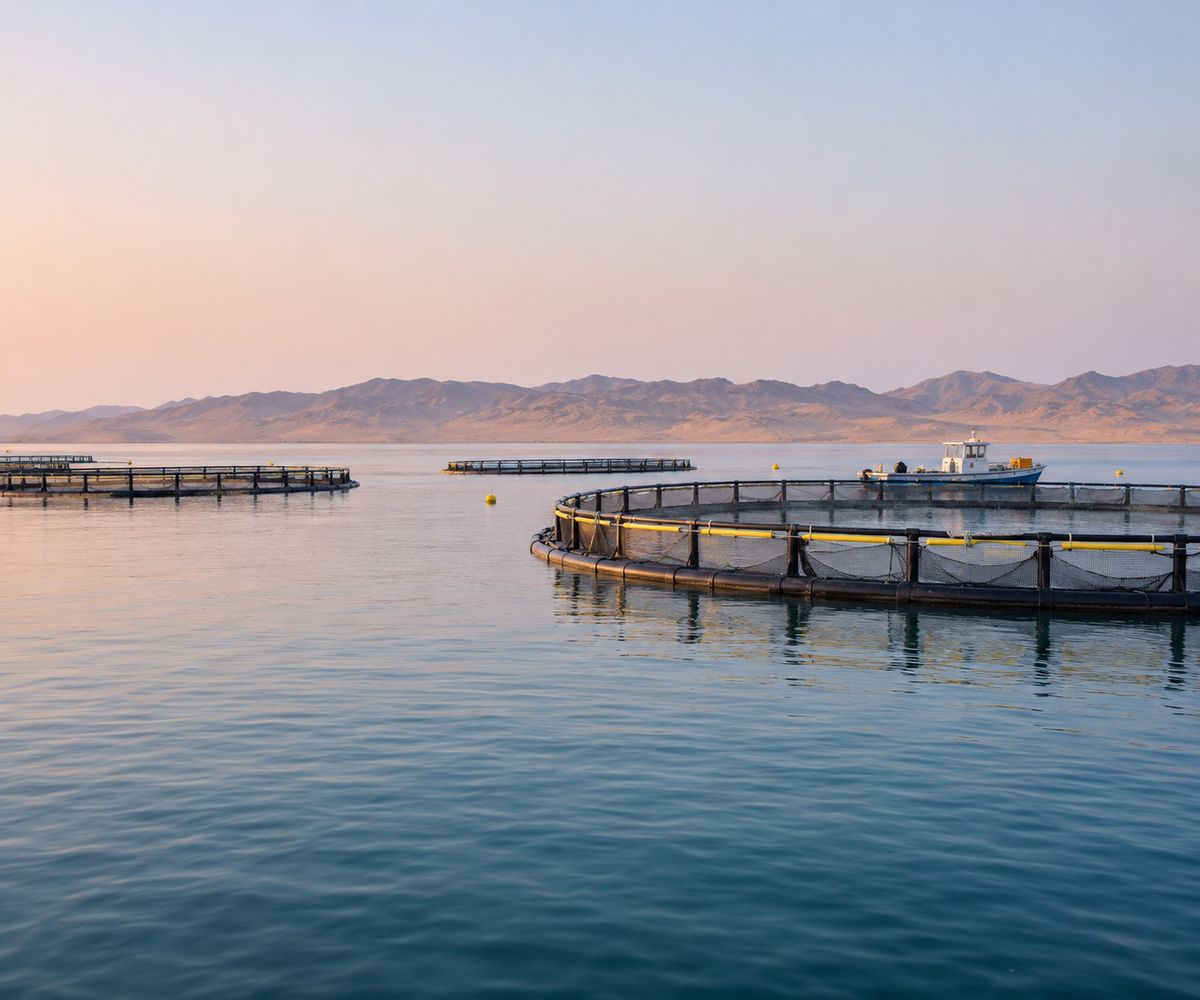
Yes, including marine cages and inland recirculating systems. Water, energy, stocking density and survival rates get particular attention, because they carry most of the risk.
We already farm. Should the study use our figures?
Yes. Your own yields, costs and sales history are the strongest evidence a lender or investor can see. We build the projections from them and explain any change.